Let WV Grow

West virginia’s future deserves a conversation.
A stronger economic future. A more informed public. A voice for West Virginia.
West Virginia is surrounded by states that have moved forward with cannabis reform, creating new markets, generating tax revenue, and expanding access. Meanwhile, our state continues to operate under a limited medical-only program.
Cannabis policy is about more than consumption. It affects economic development, agriculture, small businesses, patients, public health, individual freedom, and the future of our communities.
Let WV Grow is a citizen-led initiative working to bring those issues into the conversation and make sure West Virginians have a voice in what comes next.
We believe West Virginia deserves the opportunity to evaluate a responsible, well-regulated cannabis market that keeps economic opportunity in-state, protects consumers, supports existing businesses, and benefits local communities.
You don't have to work in the industry or use cannabis to have an opinion about the future of West Virginia.
Learn about the proposed reforms. Examine the facts. Make your voice heard.
What could cannabis reform mean for west virginia?
Local jobs and business growth
A regulated cannabis market supports more than retail jobs. Cultivation, manufacturing, construction, transportation, laboratories, security, and professional services all create opportunities for West Virginia workers and businesses.
Keeping consumer spending in-state
West Virginians already have access to legal markets in neighboring states. A regulated West Virginia market could retain some of that spending and its associated economic activity.
Revenue for West Virginia Communities
A regulated market could generate excise tax revenue for state services, counties, municipalities, and designated community programs.
Agriculture and manufacturing
West Virginia has the opportunity to expand agricultural production, processing, manufacturing, packaging, testing, and distribution. A regulated industry could create opportunities for local farmers, manufacturers, skilled workers, and small businesses throughout the state.
Public health and recovery
Tax revenue could help support substance-use treatment, recovery services, prevention, and responsible-use education.
Local government and Property Investment
Businesses can contribute to more commercial property utilization, local purchasing, employment, and municipal revenue.
funds allocation
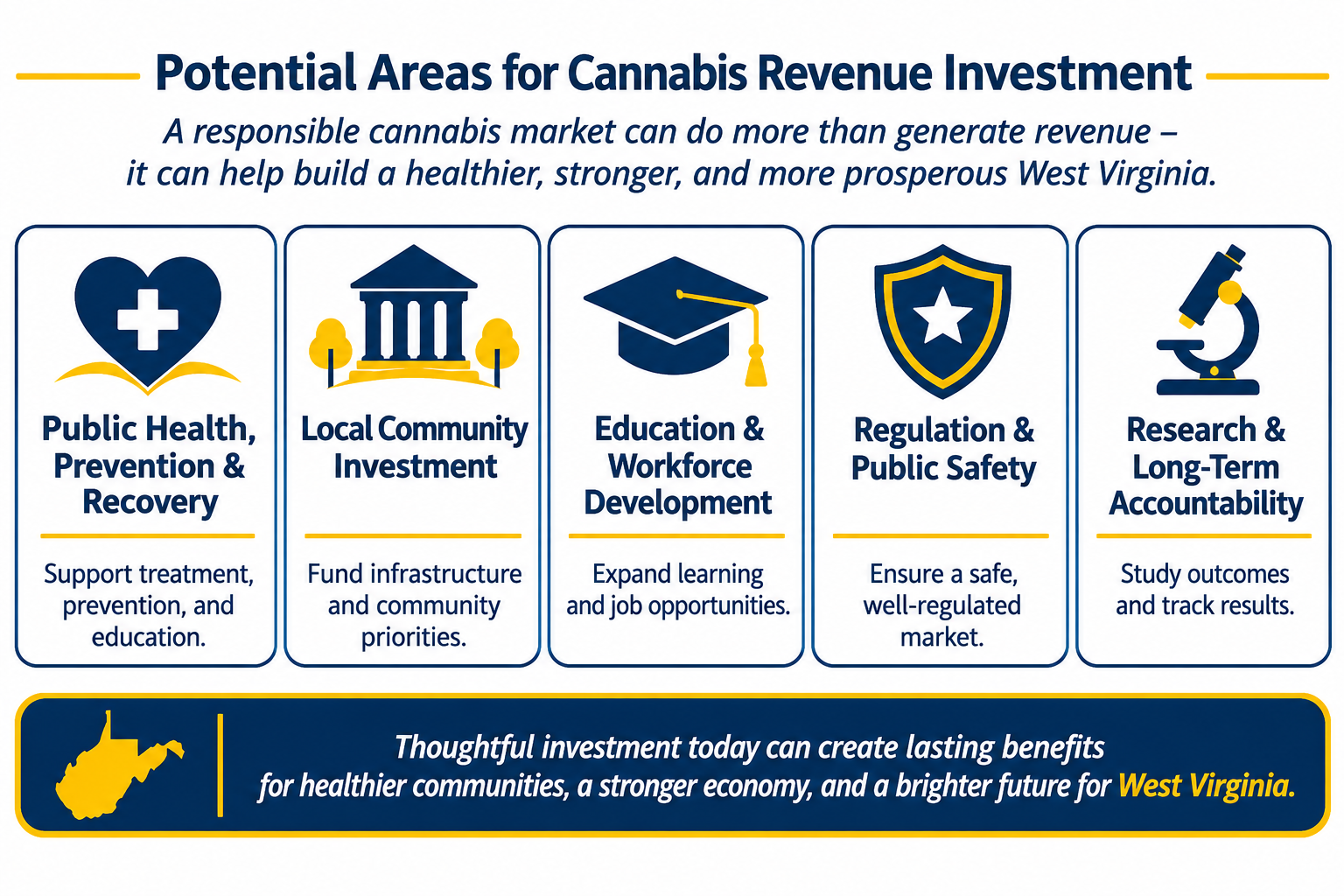
What could West Virginia actually do with the money?
Public Health, Prevention & Recovery
Invest in substance-use prevention, treatment, and recovery services, including access to care in underserved communities. Support age-appropriate public education about cannabis, responsible use, impaired driving, and the risks associated with substance use.
Local Community Investment
Provide funding to counties and municipalities for locally identified needs, including infrastructure improvements, public services, community development, and other projects that improve quality of life. Communities should have a voice in determining where these investments are most needed.
Education & Workforce Development
Support career and technical education, workforce training, agricultural programs, and opportunities that help West Virginians prepare for jobs in emerging industries. Revenue could also support broader educational priorities that benefit communities statewide.
Regulation & Public Safety
Ensure the state has the resources to properly oversee a regulated market. This includes licensing, inspections, independent product testing, compliance enforcement, consumer protections, youth prevention, and impaired-driving education.
Research & Long-Term Accountability
Support independent research into cannabis, public health, consumer behavior, and the effects of legalization. West Virginia should evaluate outcomes over time and make funding decisions based on measurable results rather than assumptions.
Make the Investment Transparent
West Virginians should be able to see where cannabis revenue comes from, where it goes, and what it accomplishes.
Any revenue allocation plan should include:
Clearly defined funding purposes and responsible agencies.
Annual public reporting of collections, distributions, and expenditures.
Measurable goals and outcomes for funded programs.
Periodic review to determine whether programs are effective.
Safeguards against relying on unpredictable cannabis revenue to fund essential services that require consistent long-term funding.
A Return That Reaches West Virginia
Cannabis reform should be about more than creating another source of tax revenue. It should be an opportunity to keep more consumer spending in the state, support local economies, fund meaningful public priorities, and give communities a stake in West Virginia's future.
The question isn't simply how much revenue a regulated market could generate. It's what West Virginia chooses to do with it.

Let WV Grow
What neighboring states are collecting?
FY2025 cannabis tax revenue for
Maryland:
$71.8M
FY2025 cannabis tax revenue for
Ohio:
$55.6M
FY2025 adult-use excise tax revenue for
West Virginia
$0
Adult-use cannabis excise tax revenue; no regulated adult-use retail market exists.
Sources: Maryland Department of Legislative Services and Ohio Department of Taxation.
Maryland’s $71.8 million is cannabis tax revenue under its sales-and-use-tax system.
Ohio’s $55.6 million is specifically adult-use excise tax revenue, separate from ordinary sales tax.
Ohio’s FY2025 figure represents an early period of adult-use sales, which began in August 2024.
These figures should not be presented as a direct comparison of identical tax systems.
Contact Us
Stay up to date with any changes, new initiatives, new events, new surveys, and more.